How it works
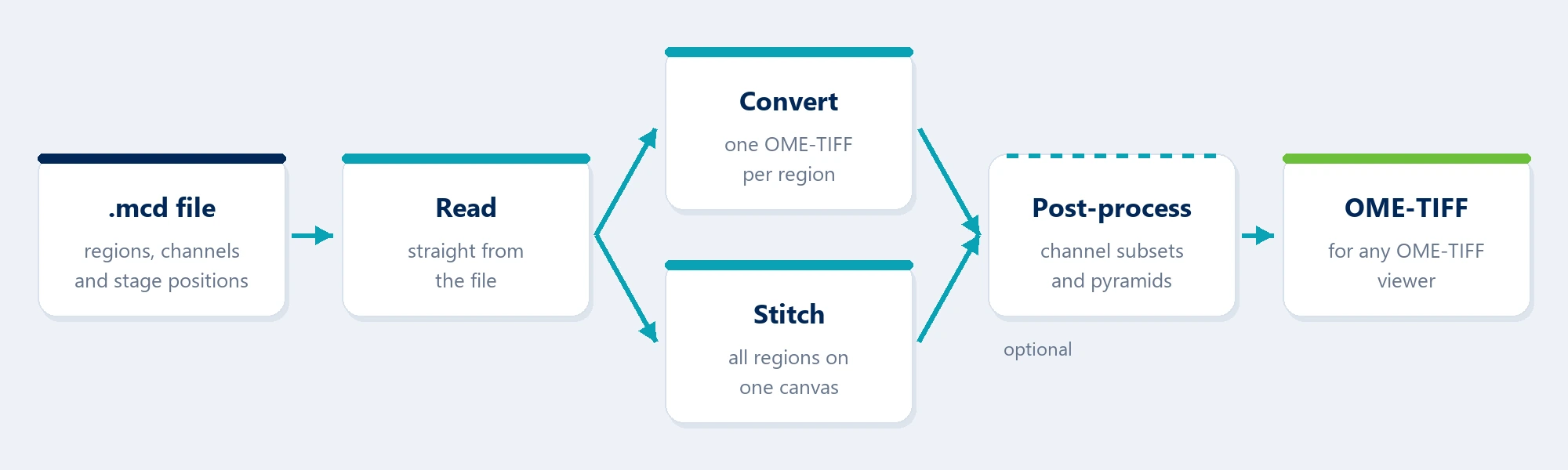
Read
Each region comes straight out of the .mcd file, with its channels, pixel size, acquisition time and stage position. MCD Stitcher reads the file itself, so nothing else needs to be installed.
Convert
Every region is written to its own OME-TIFF, with its channel names in the file's metadata.
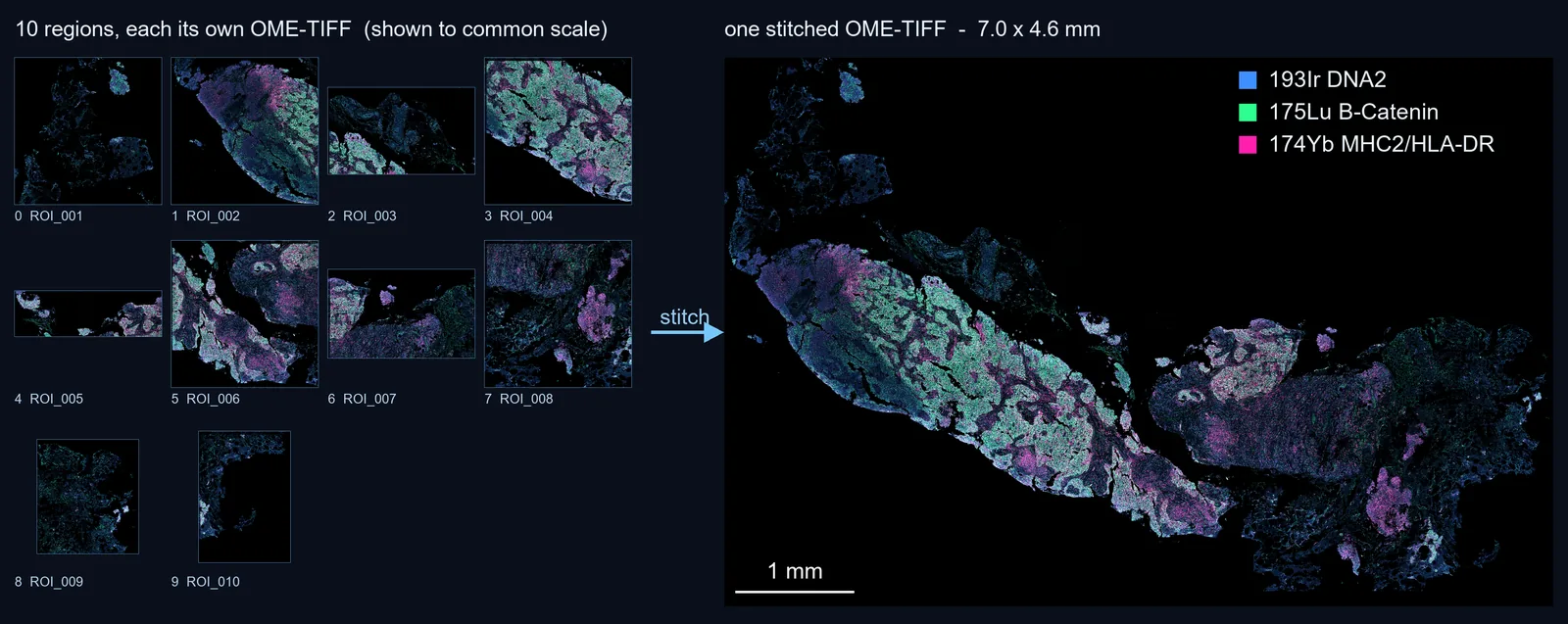
Stitch
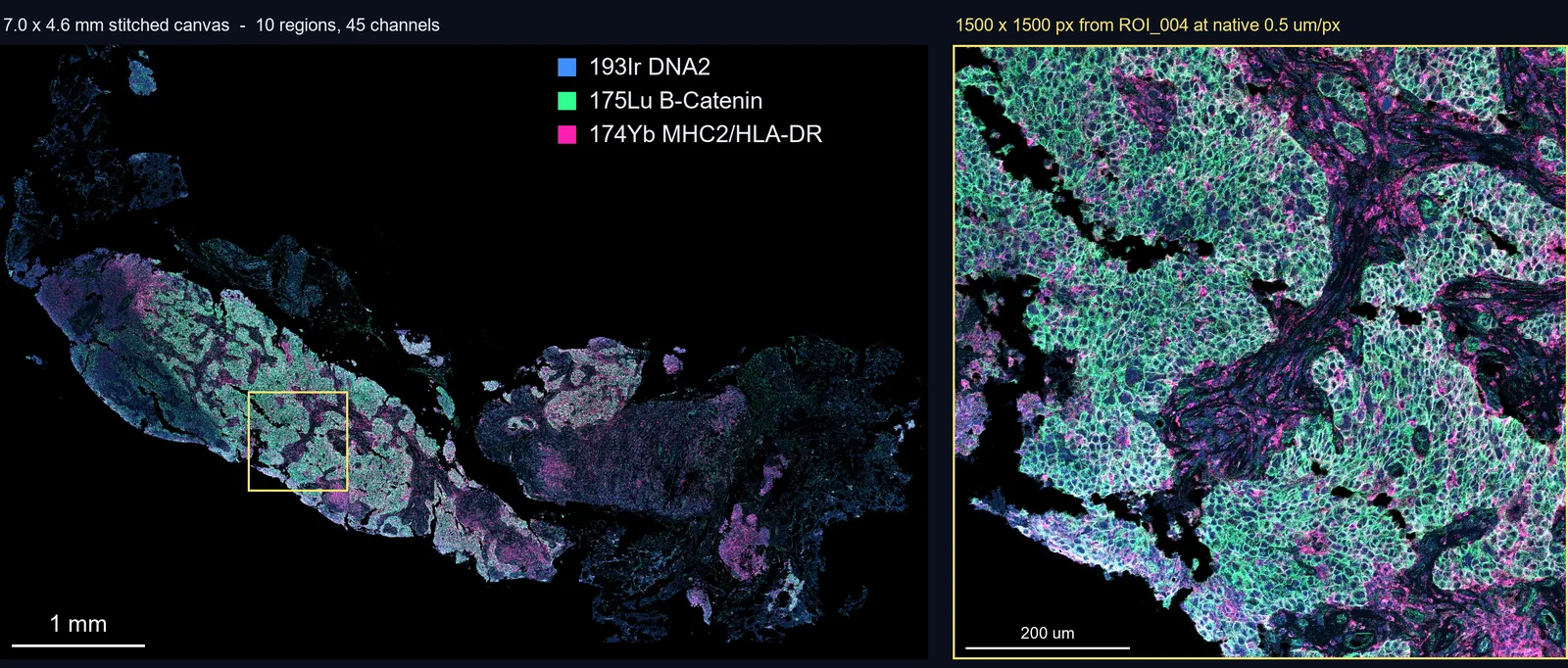
The regions are placed on one canvas at the stage positions recorded when they were acquired. There is no registration and no seam blending, so the canvas shows exactly what was acquired.
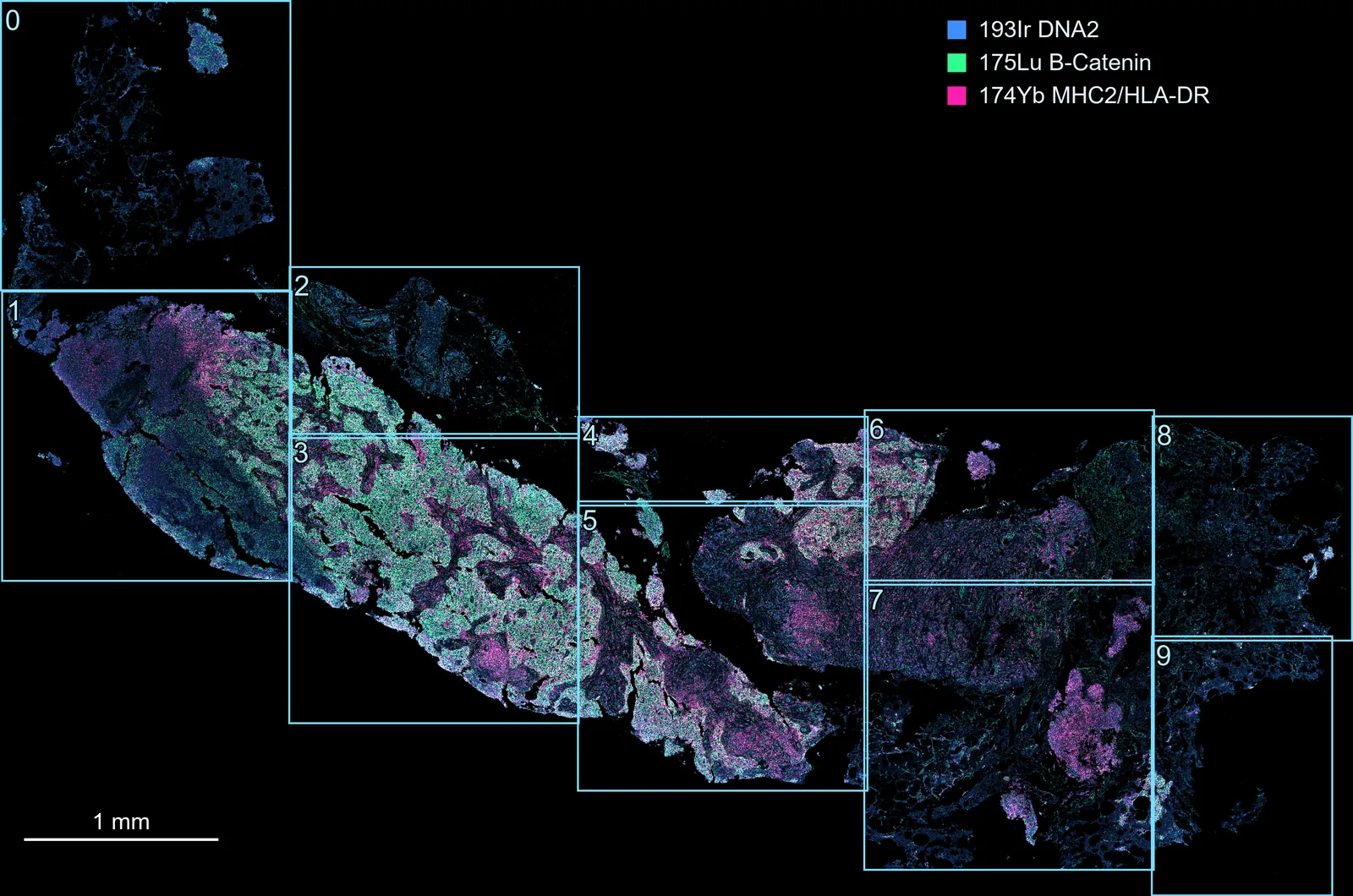
-m prints and -r selects.- Regions acquired at different step sizes are resampled onto the finest common grid.
- Where regions overlap, the earliest acquisition stays on top.
- Space between regions is left empty.
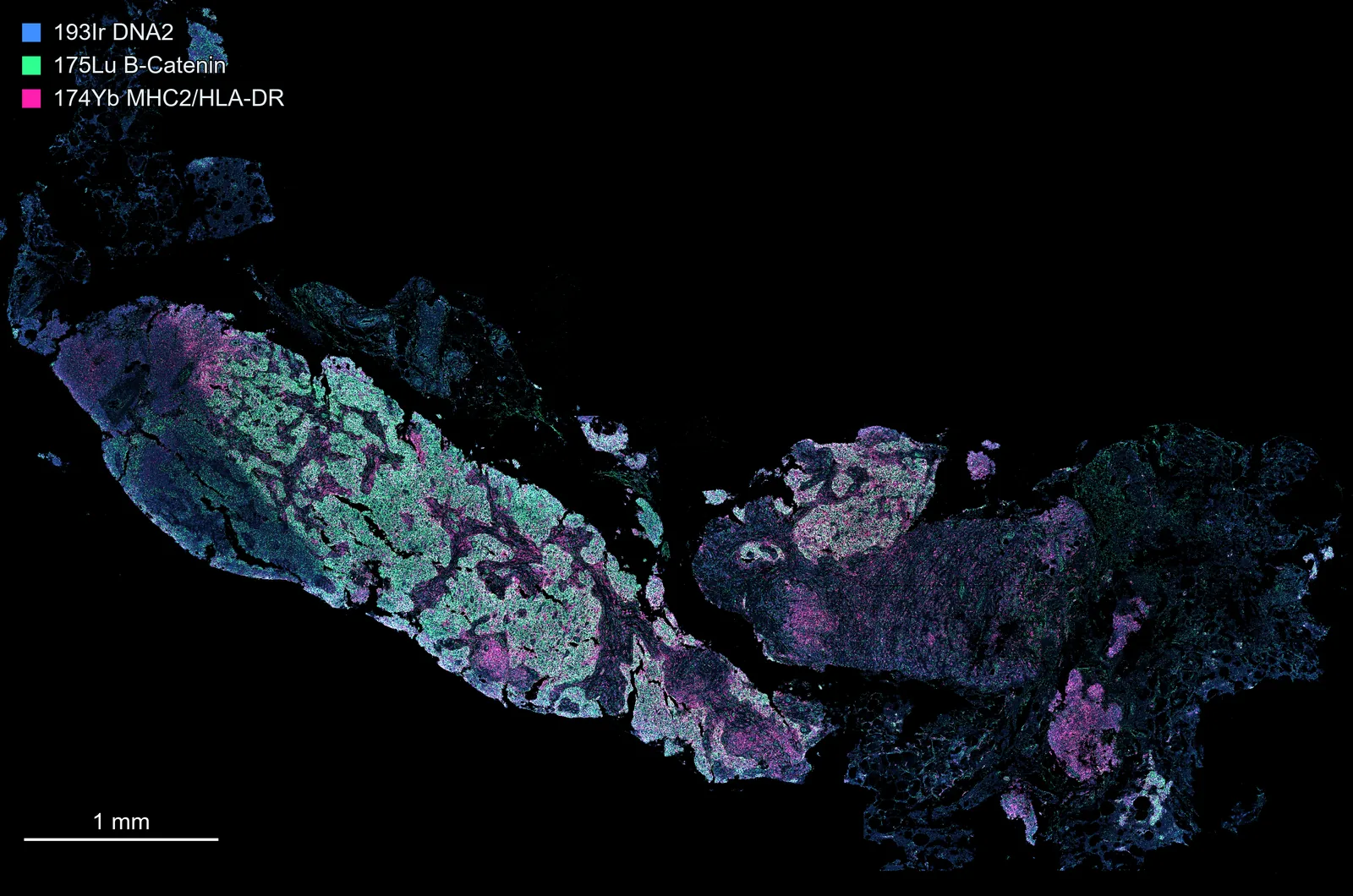
Native resolution, end to end
Stitching costs no detail: a 7.0 × 4.6 mm canvas at 0.5 µm/px still resolves single cells.
Post-process
Two optional copies are made from the converted or stitched files:
- Channel subsets (
_filtered) hold only the channels you choose, for smaller files. - Pyramids (
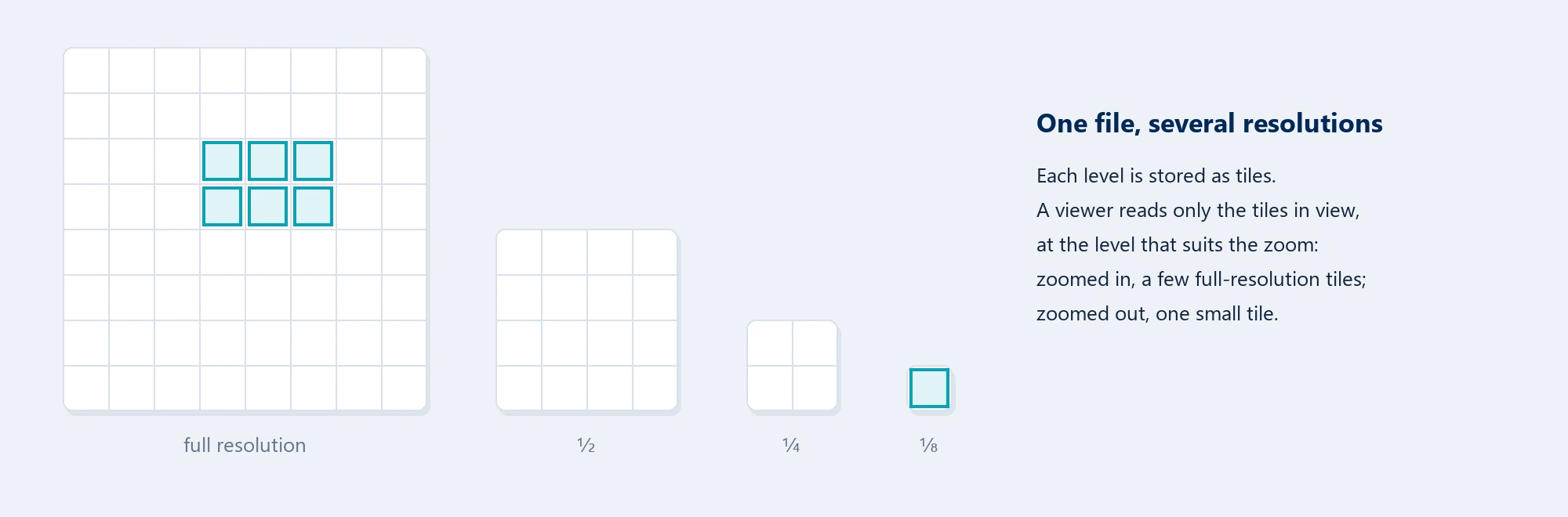
_pyramid) store the image as tiles at several resolutions, so large canvases pan and zoom smoothly.
Built for large slides
Every run plans its work against the memory available. A canvas too big for it is built in several passes, and a very large region is read in channel groups, so the same run completes on a laptop and on a cluster node. See Memory for where the budget comes from.
The paper
The method and its evaluation are described in the preprint:
Chaurasia, P. (2026). MCD Stitcher: An open-source tool for whole-slide stitching and conversion of Imaging Mass Cytometry data. bioRxiv.